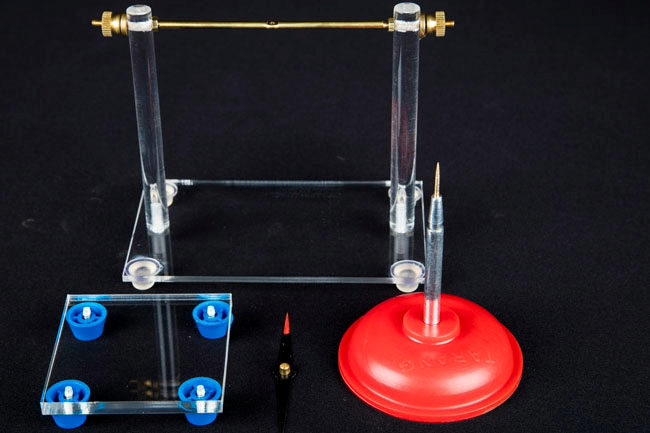
Magnetic Material Finder
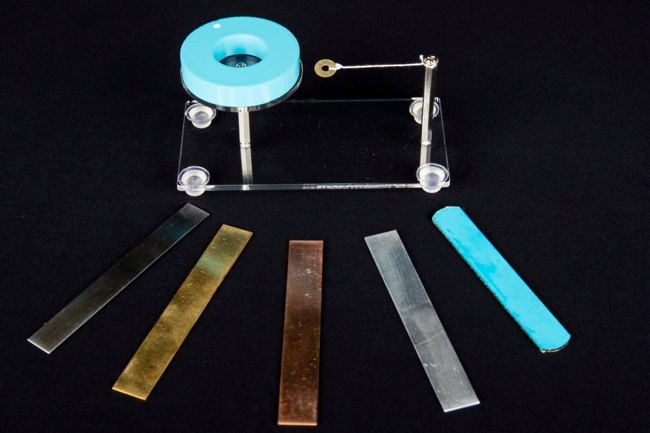
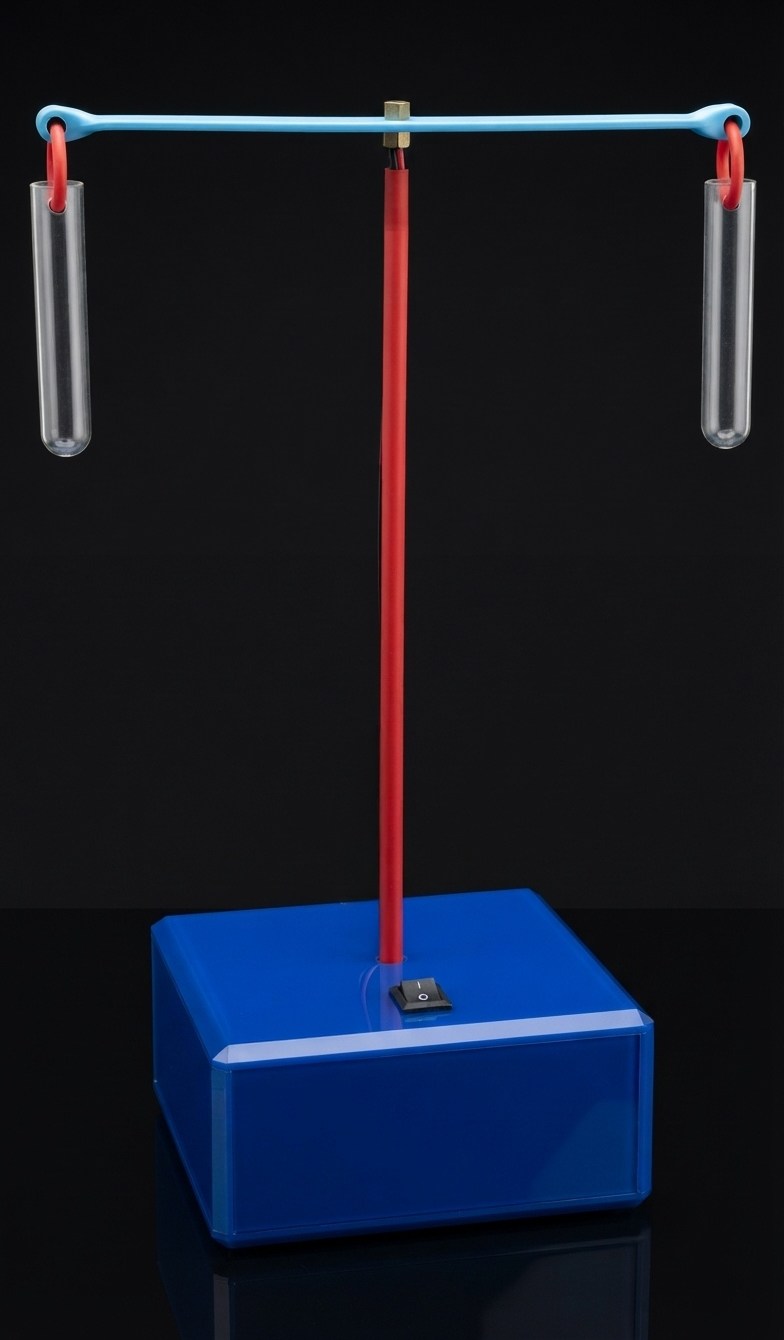
A pivoting magnet and pointer swing toward any sample brought near it — sorts magnetic from non-magnetic materials.
AMU Scientific Instruments — Belagavi, Karnataka
AMU designs and manufactures laser-cut laboratory apparatus mapped to the CBSE syllabus — from magnetism to trigonometry. Every instrument ships in a choice of clear acrylic or MDF construction.
AMU Scientific Instruments was founded in 2026 by Karan N. Londe with a simple idea: science education becomes more meaningful when students can see it, touch it, experiment with it, and understand how it works.
The company began with the development of compact, practical physics demonstrators designed to make classroom concepts more engaging and easier to understand. From magnetism and electromagnetism to geometry, mathematics, and other foundational concepts, AMU Scientific Instruments focuses on creating educational apparatus that connects textbook theory with hands-on learning.
Today, AMU develops science and mathematics instruments aligned with the CBSE curriculum, covering concepts from Grade 6 through Grade 10. Each instrument is designed with a specific concept or textbook chapter in mind, rather than being created as a generic laboratory product — designed, fabricated, assembled, and tested in-house before it's added to the catalogue.
Every instrument is built against a specific CBSE chapter and concept, not a generic science-kit brief.
Clear acrylic where the mechanism should be visible, MDF for schools equipping classrooms at scale.
Every design is refined against real classroom requirements, usability, durability, and ease of demonstration.
"Science should not only be something students read about. It should be something they can experience."
To build a range of accessible, curriculum-aligned scientific instruments that help schools move beyond demonstration-based teaching toward more interactive and experiential science education.
To design practical, affordable, and curriculum-aligned educational instruments that make science and mathematics more engaging through hands-on learning.
Each instrument is built to a specific CBSE syllabus chapter and ships in a choice of acrylic or MDF. Prices shown are indicative per unit, ex-Belagavi.
A pivoting magnet and pointer swing toward any sample brought near it — sorts magnetic from non-magnetic materials.
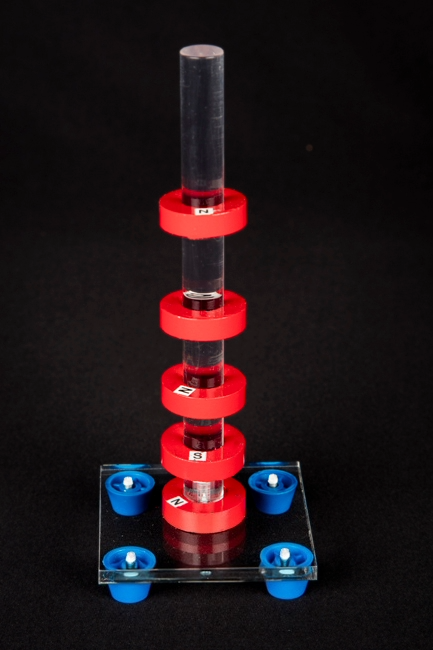
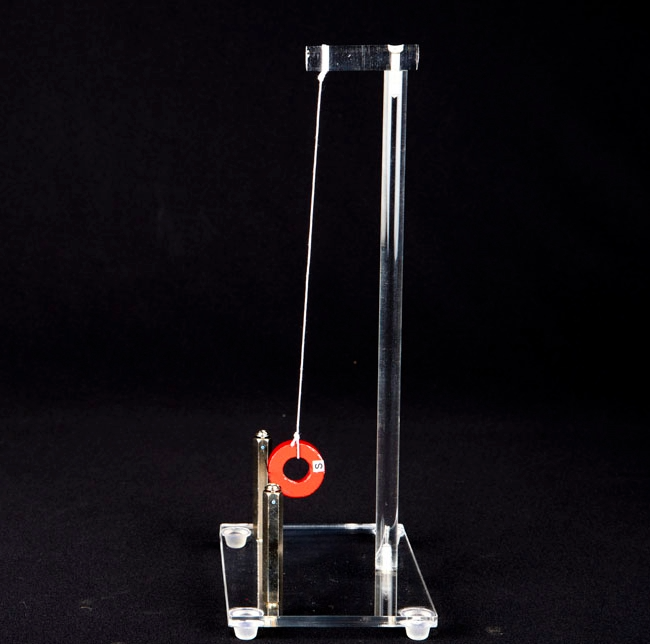
Ring magnets stacked with alternating poles float above one another, demonstrating magnetic repulsion without contact.
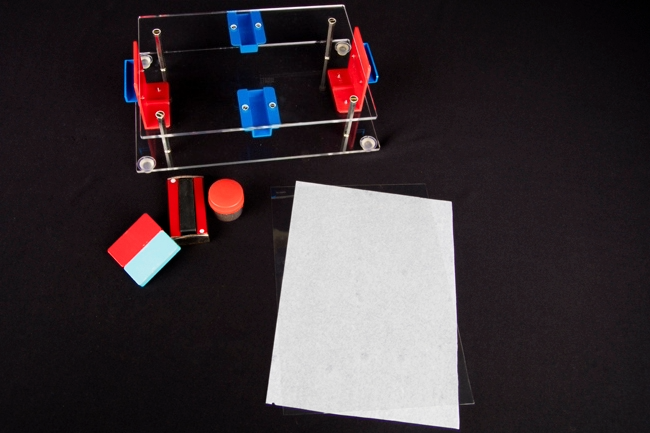
Bar magnets held in a fixed frame beneath a removable sheet — sprinkle iron filings to trace field lines directly.
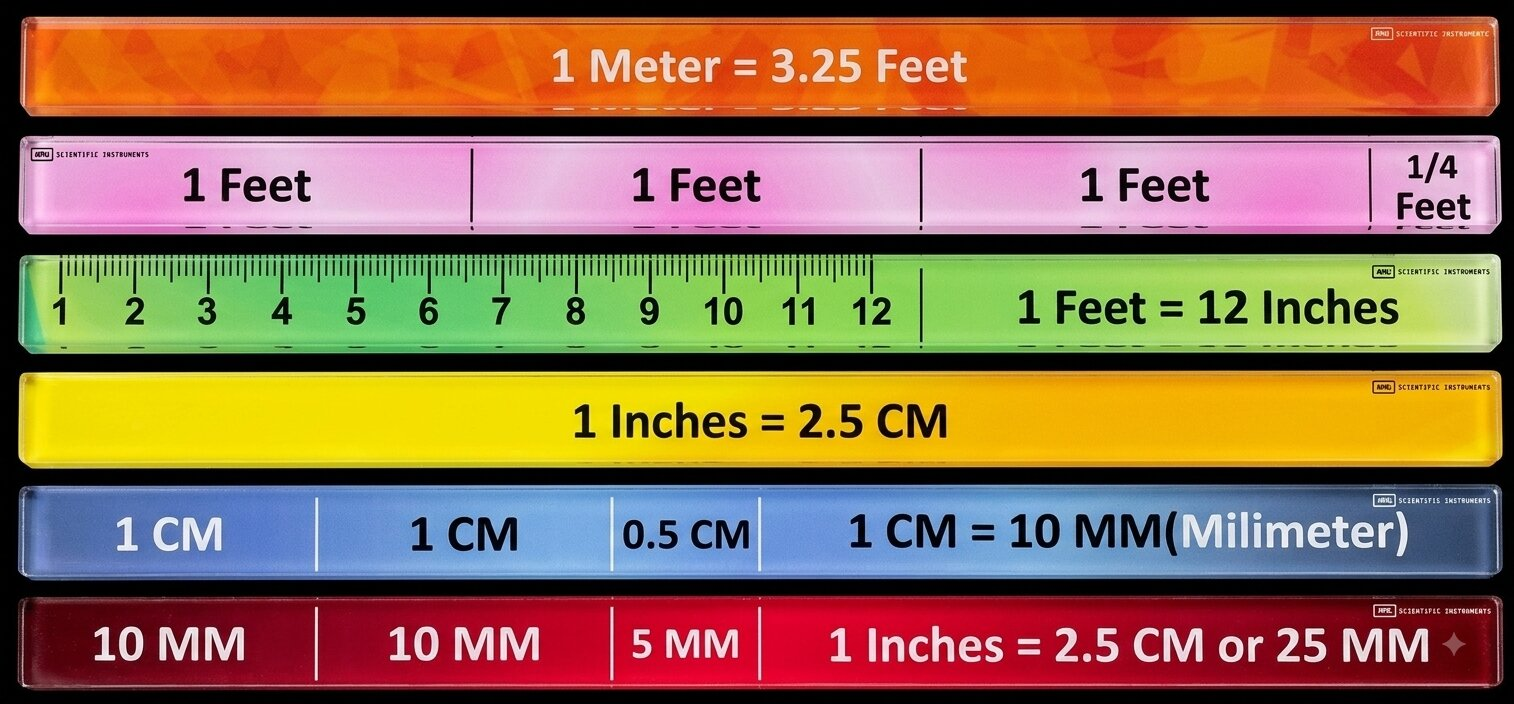
A hand lens paired with a fine graduated scale for reading small lengths more precisely than the eye alone allows.
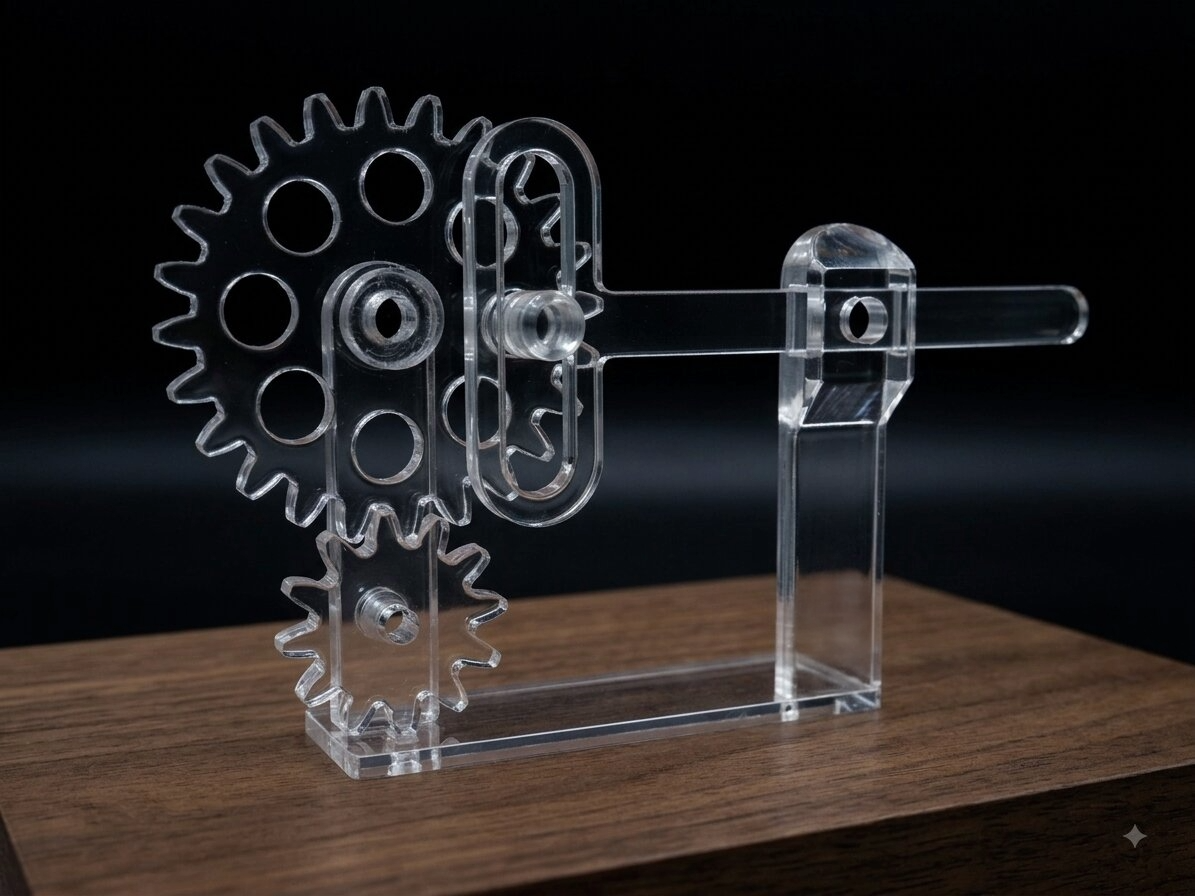
A crank-and-slider mechanism converts steady circular turning into back-and-forth linear motion, and back again.
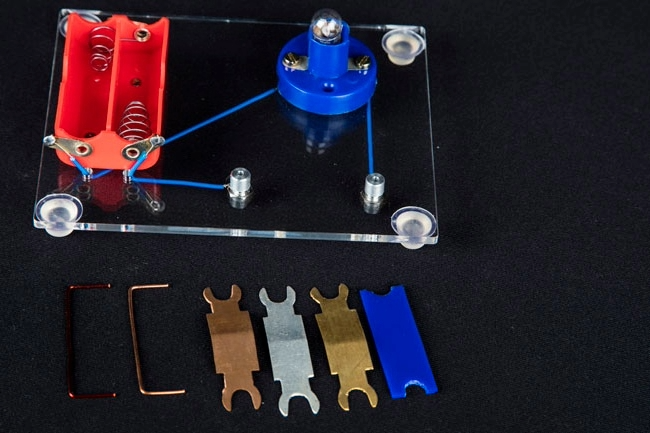
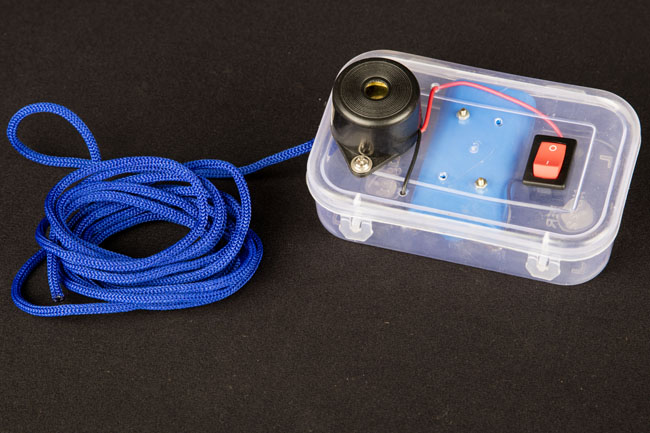
A simple test circuit with a swappable sample holder — the bulb lights only when a conducting material completes the circuit.
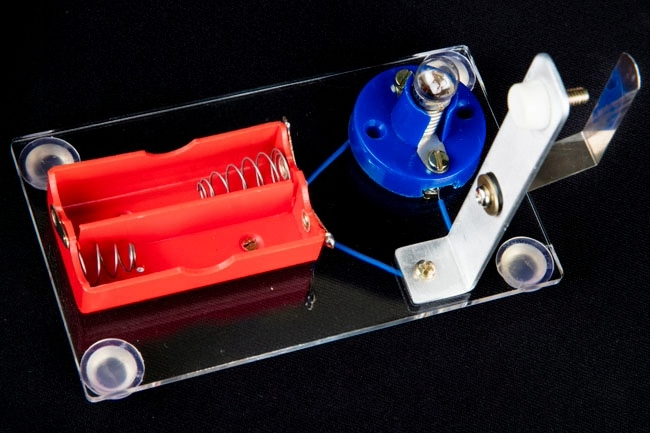
A basic circuit board with a switch and LED, showing how closing the circuit lets current flow and light the LED.
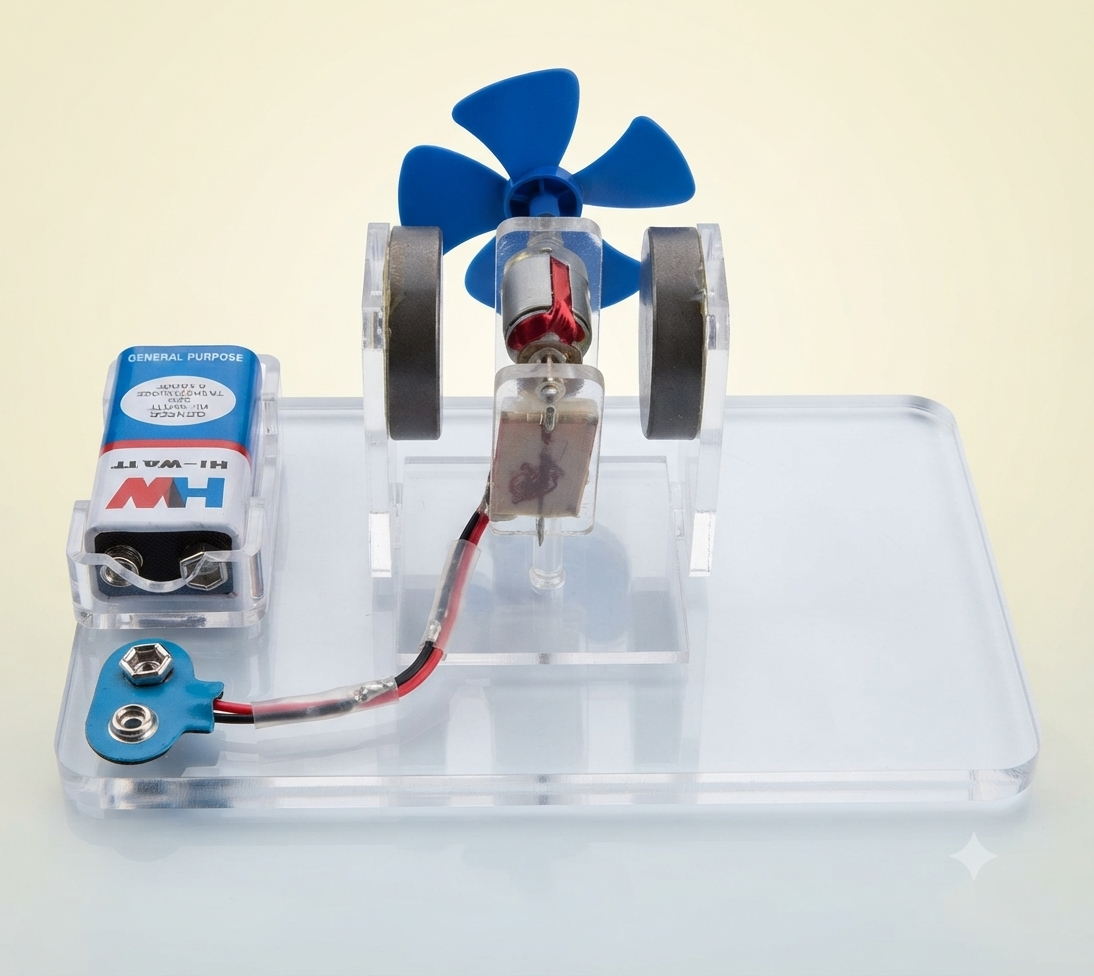
A small hand-wound DC motor mounted for viewing — shows how current through a coil in a magnetic field produces rotation.
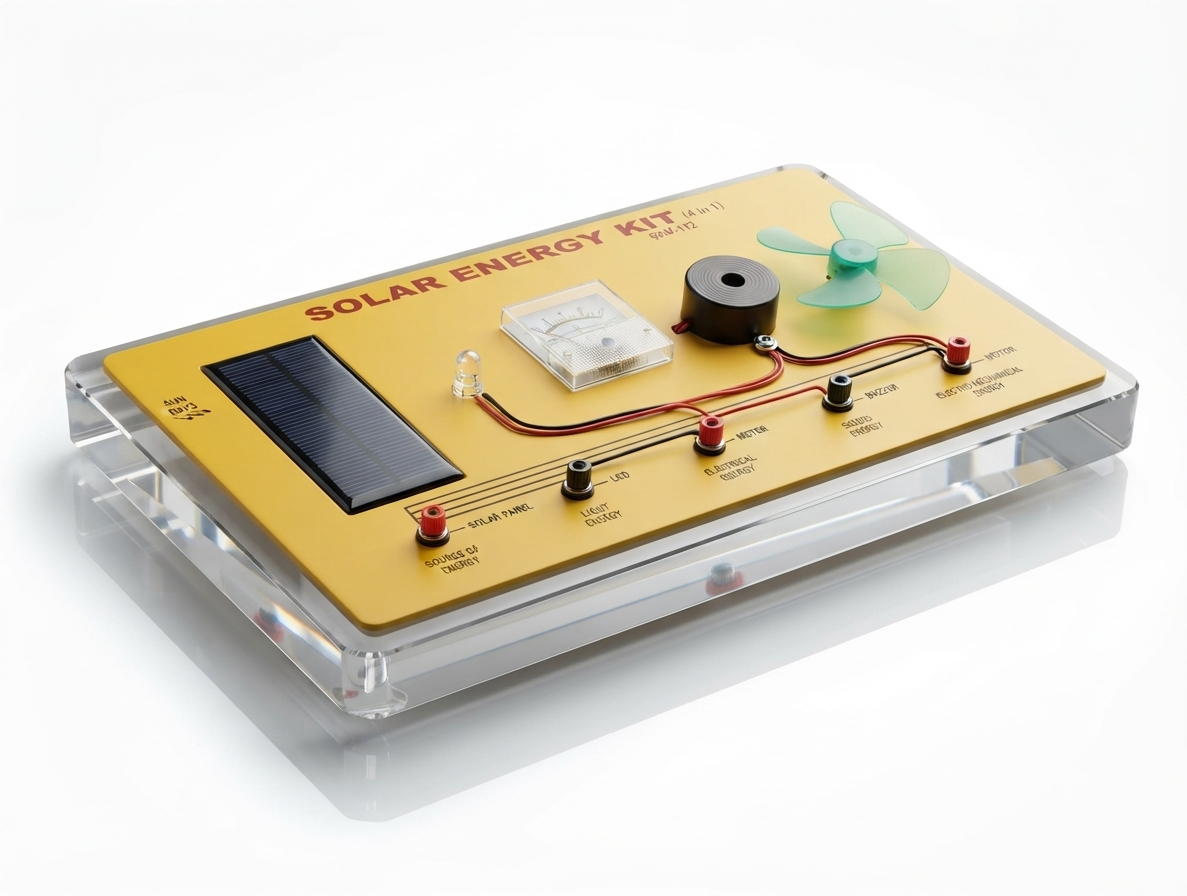
A small photovoltaic panel wired to a meter or LED, showing how light is converted directly into electrical current.
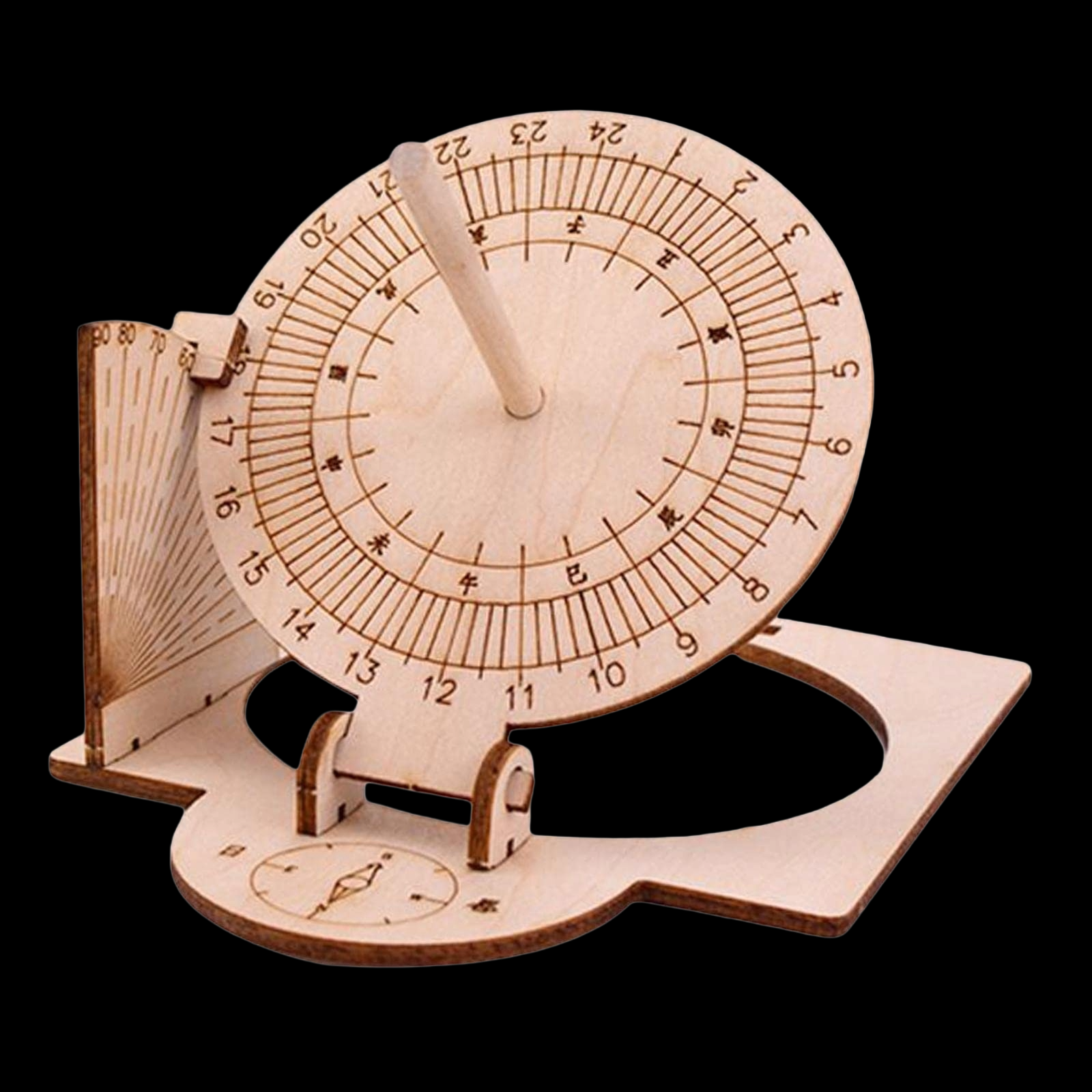
A fixed gnomon casts a shadow onto a graduated dial, showing how the sun's position across the day can be used to tell time.
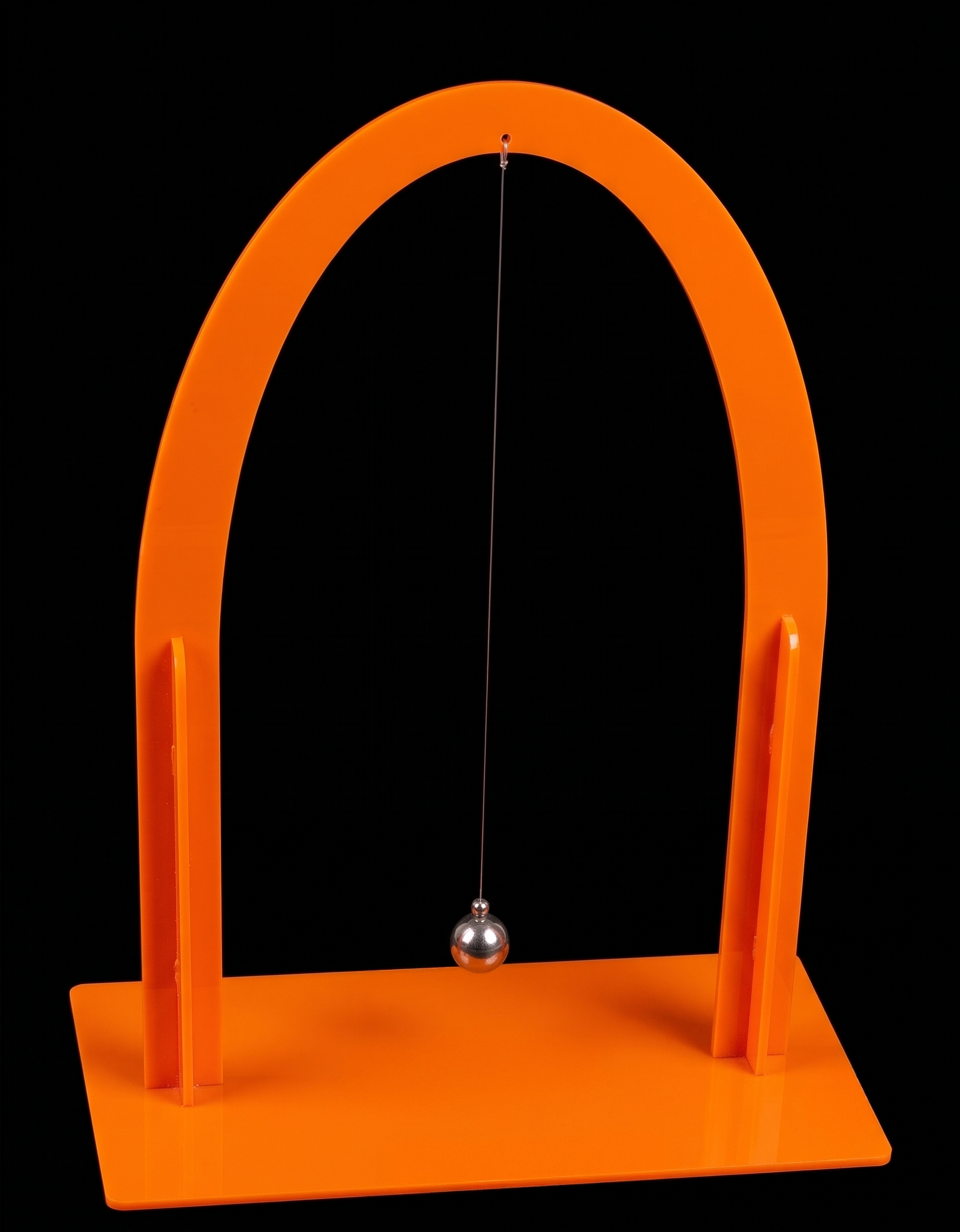
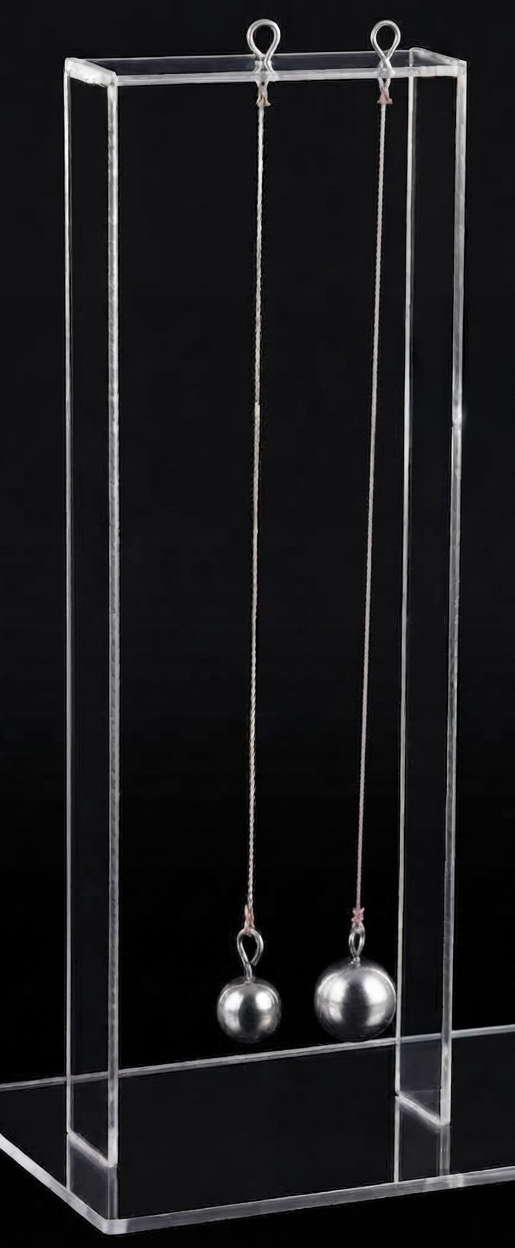
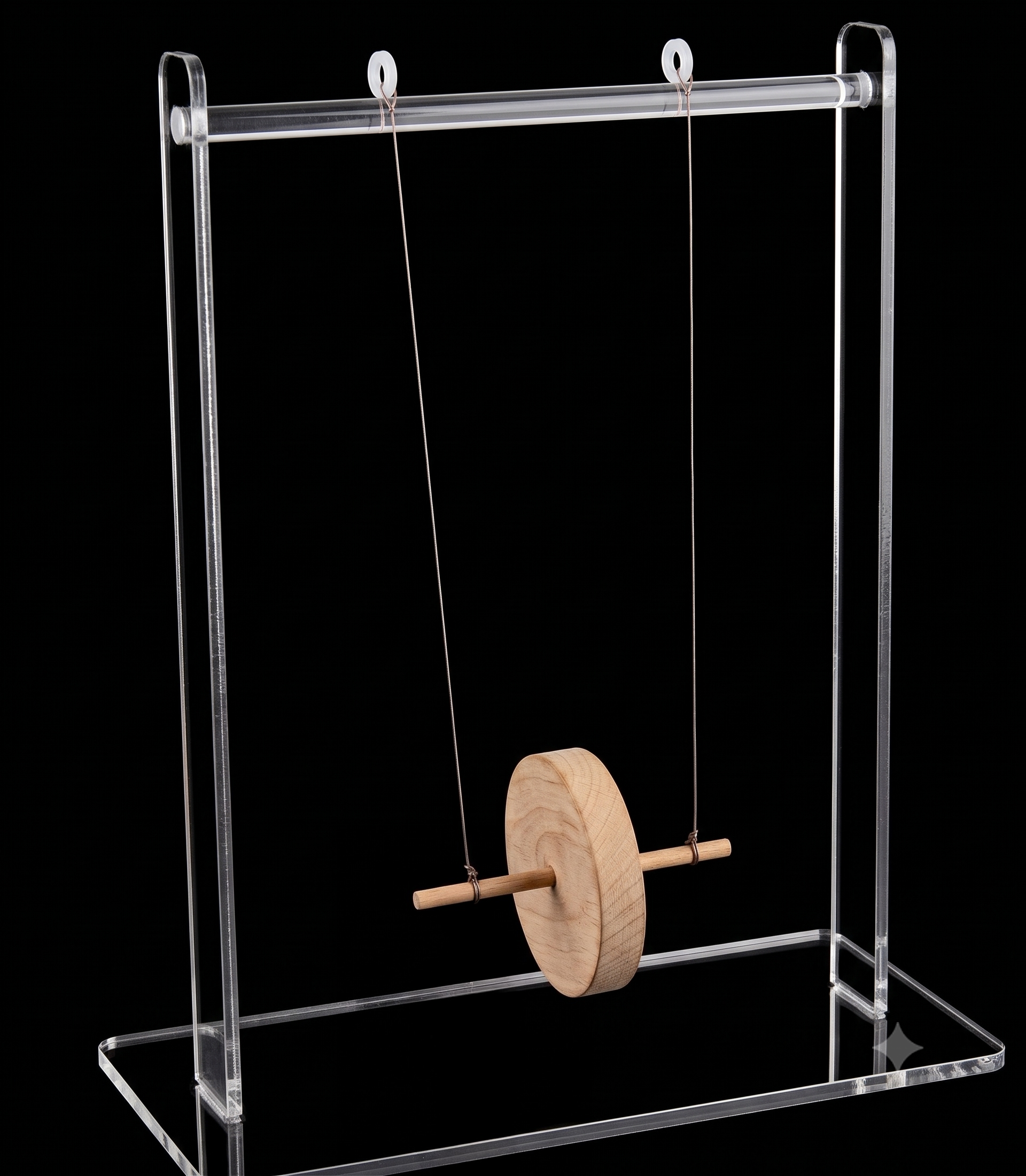
A bob on a string swings from a fixed point — the basic setup for studying periodic motion.
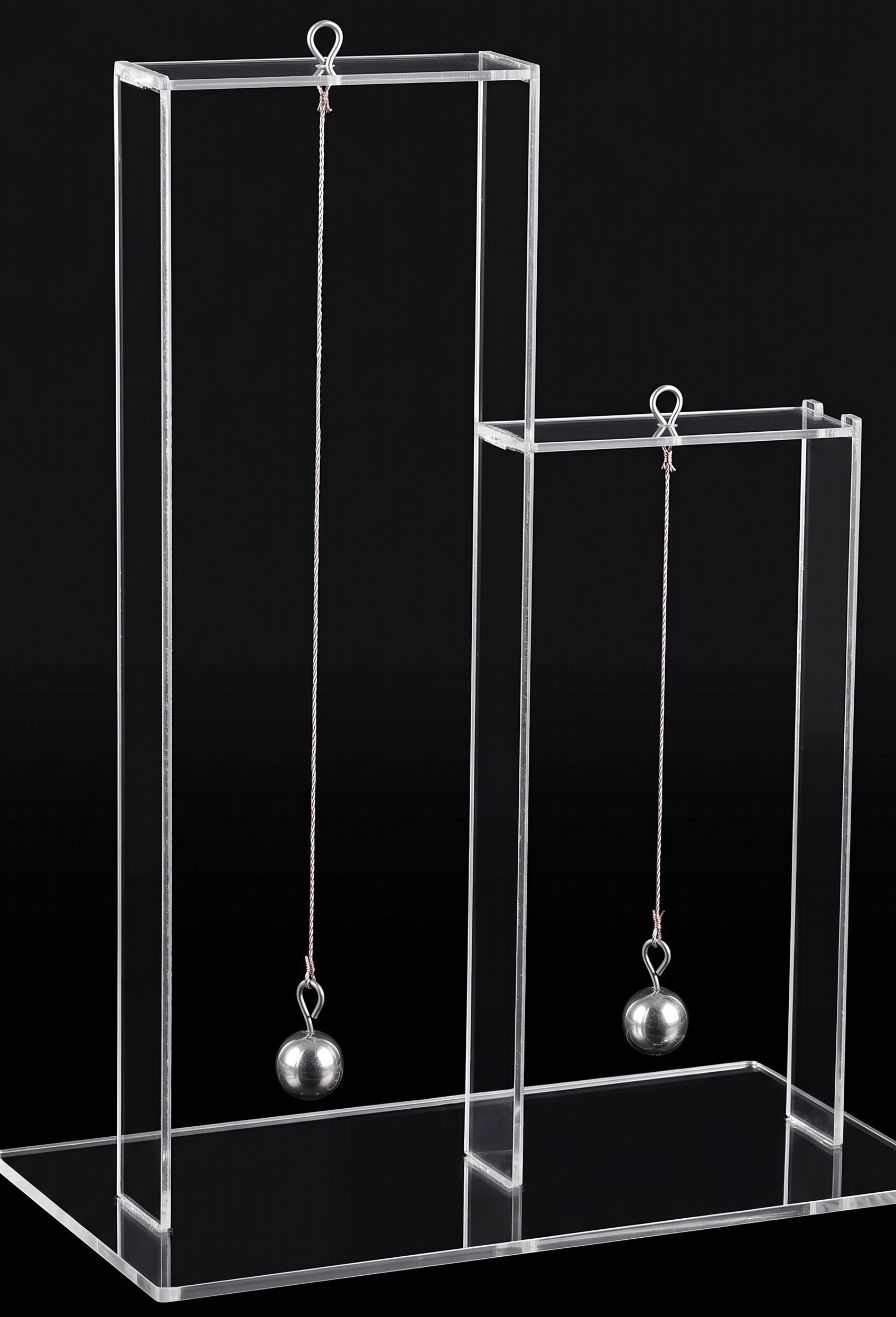
Interchangeable string lengths let students time the swing and see how period changes with pendulum length.
Interchangeable bobs and an adjustable swing angle let students test whether period depends on amplitude or mass.
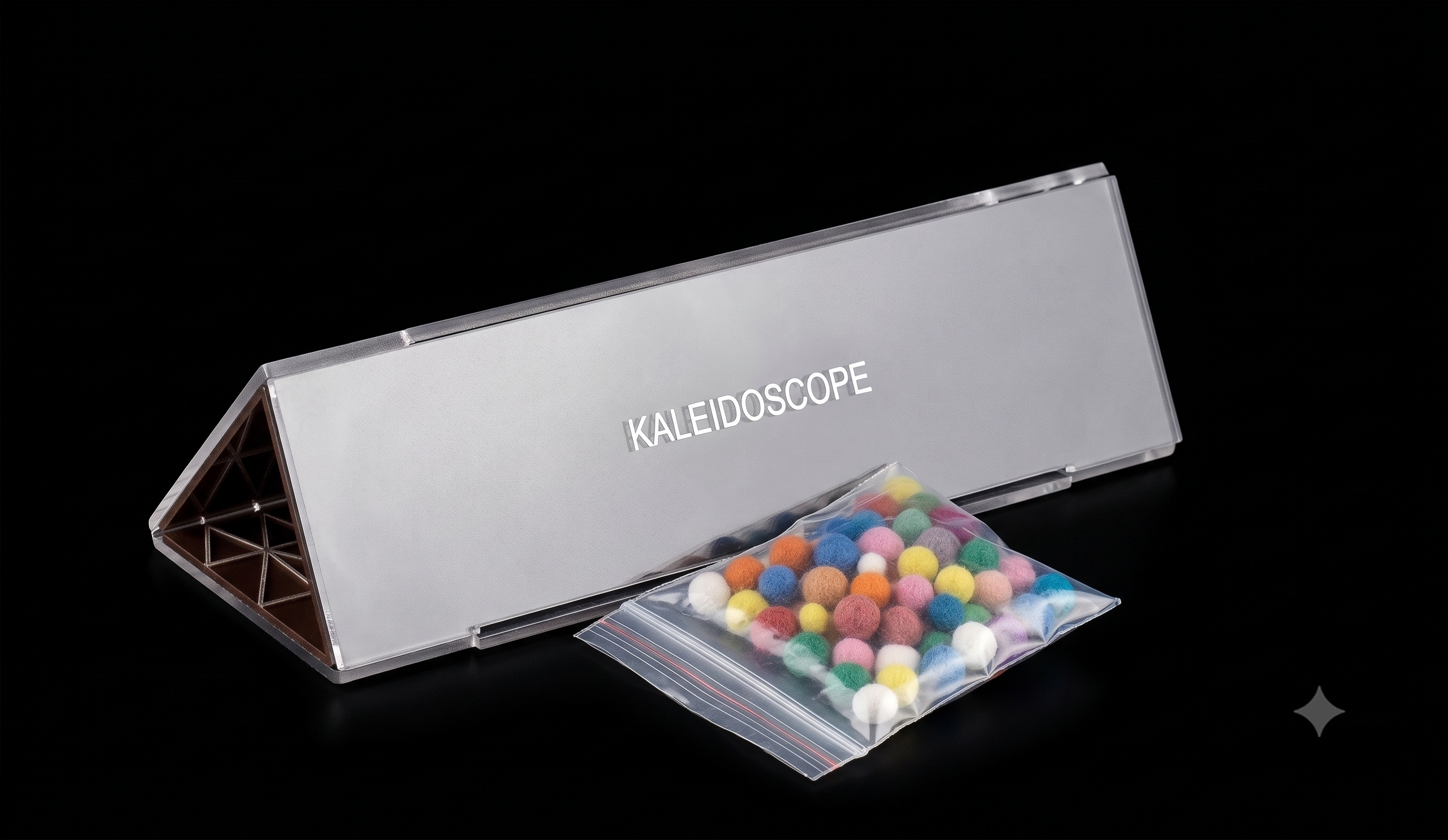
Angled mirrors inside a tube multiply a small set of loose objects into a repeating symmetrical pattern.
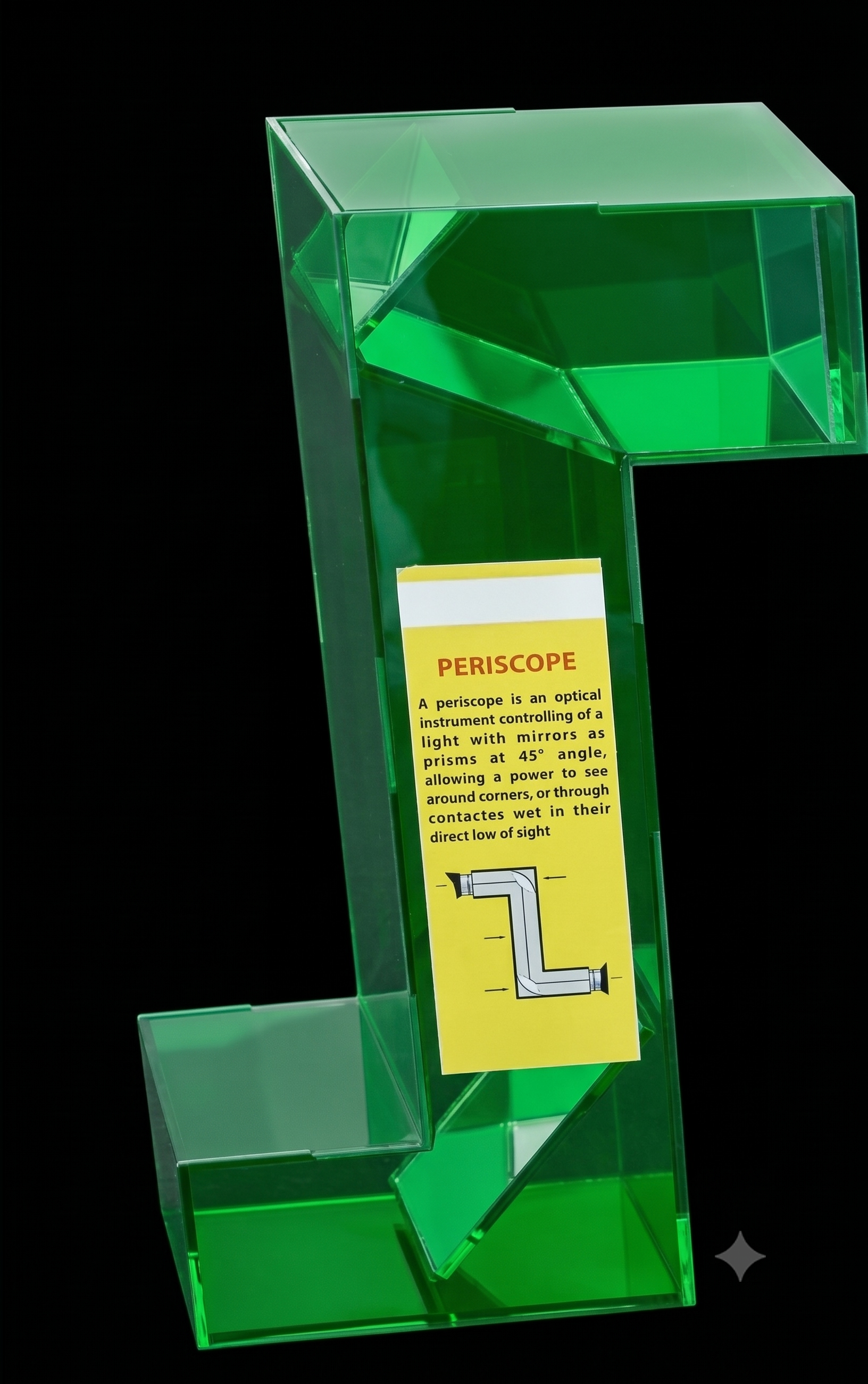
Two parallel mirrors set at 45° let you see over or around an obstacle by redirecting the light path twice.
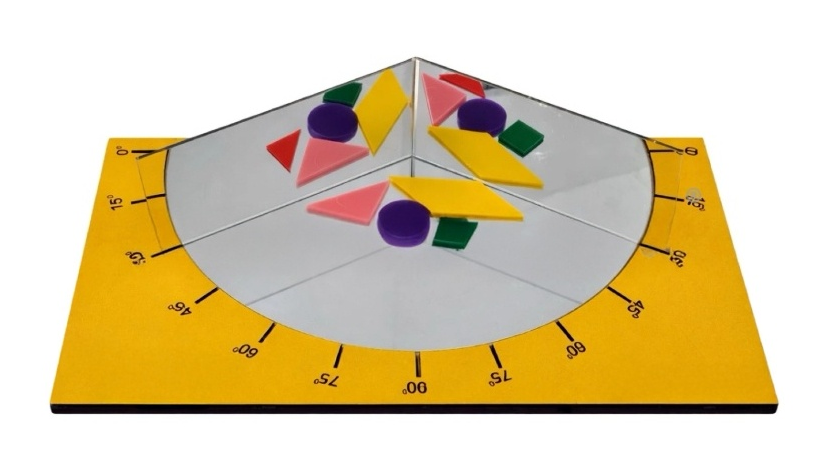
Two mirrors hinged at a variable angle show how the number of images formed changes as the angle between them changes.
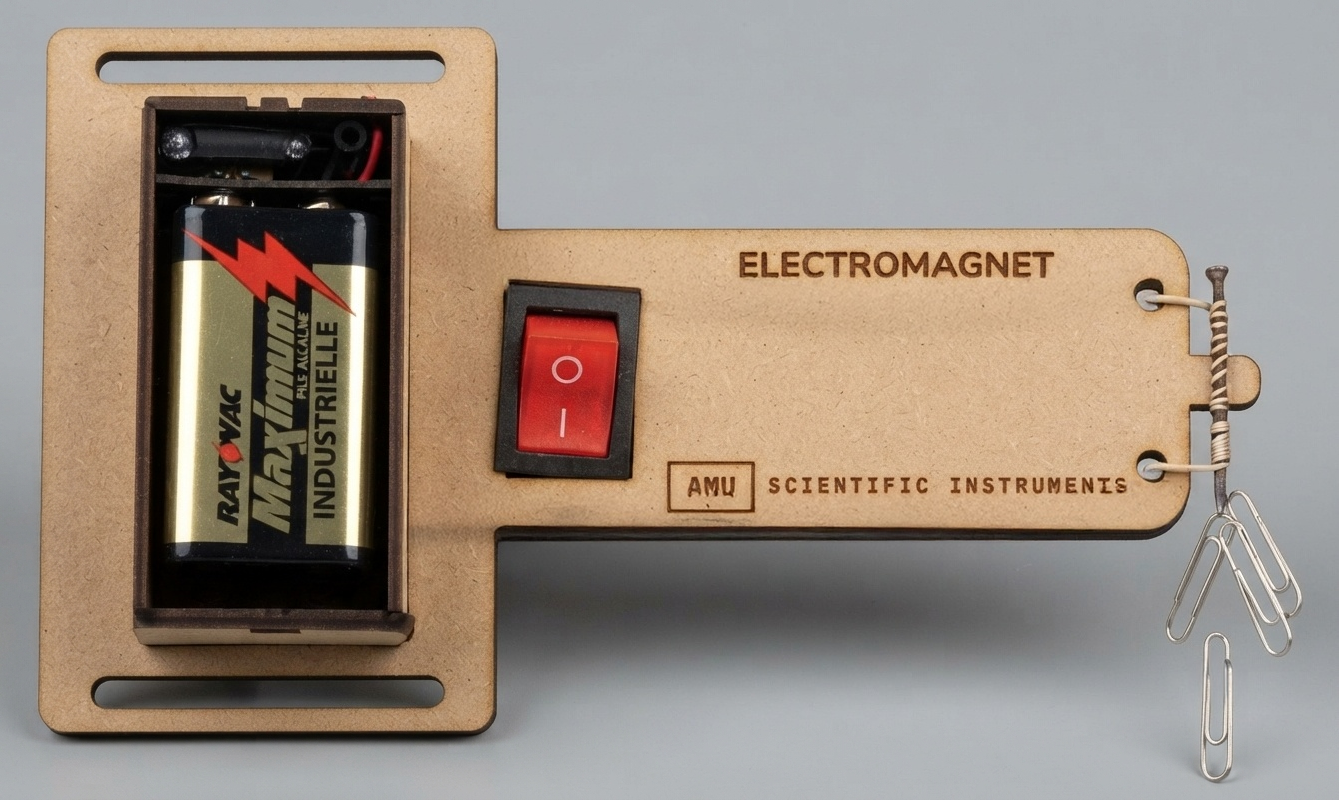
A coil of wire wound around an iron nail becomes magnetic only while current flows through it — picks up pins on demand.
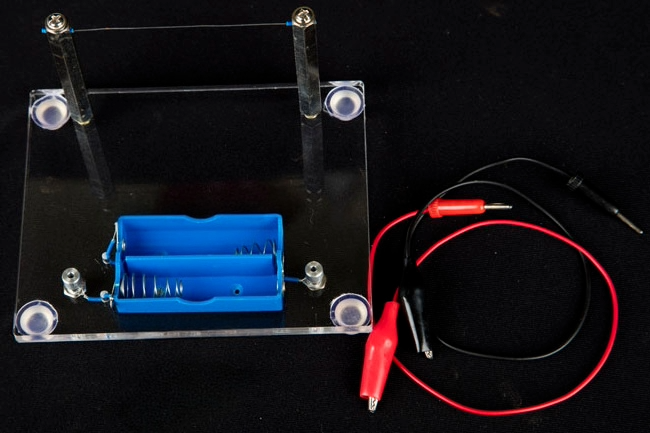
A resistance wire glows and warms a nearby thermometer as current passes through it, showing electrical energy converting to heat.
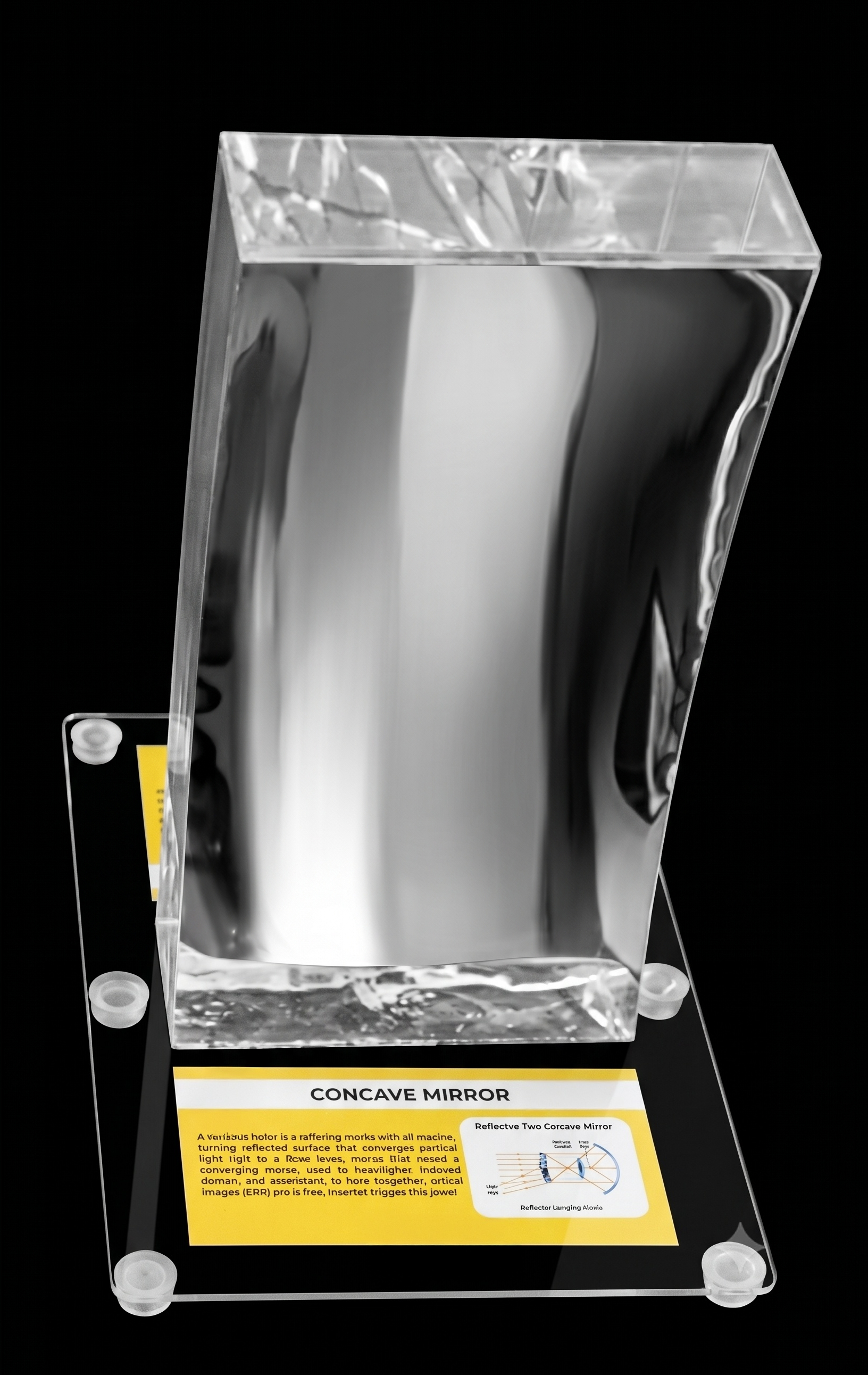
Interchangeable concave and convex mirror inserts let students compare how each type distorts or resizes a reflected image.
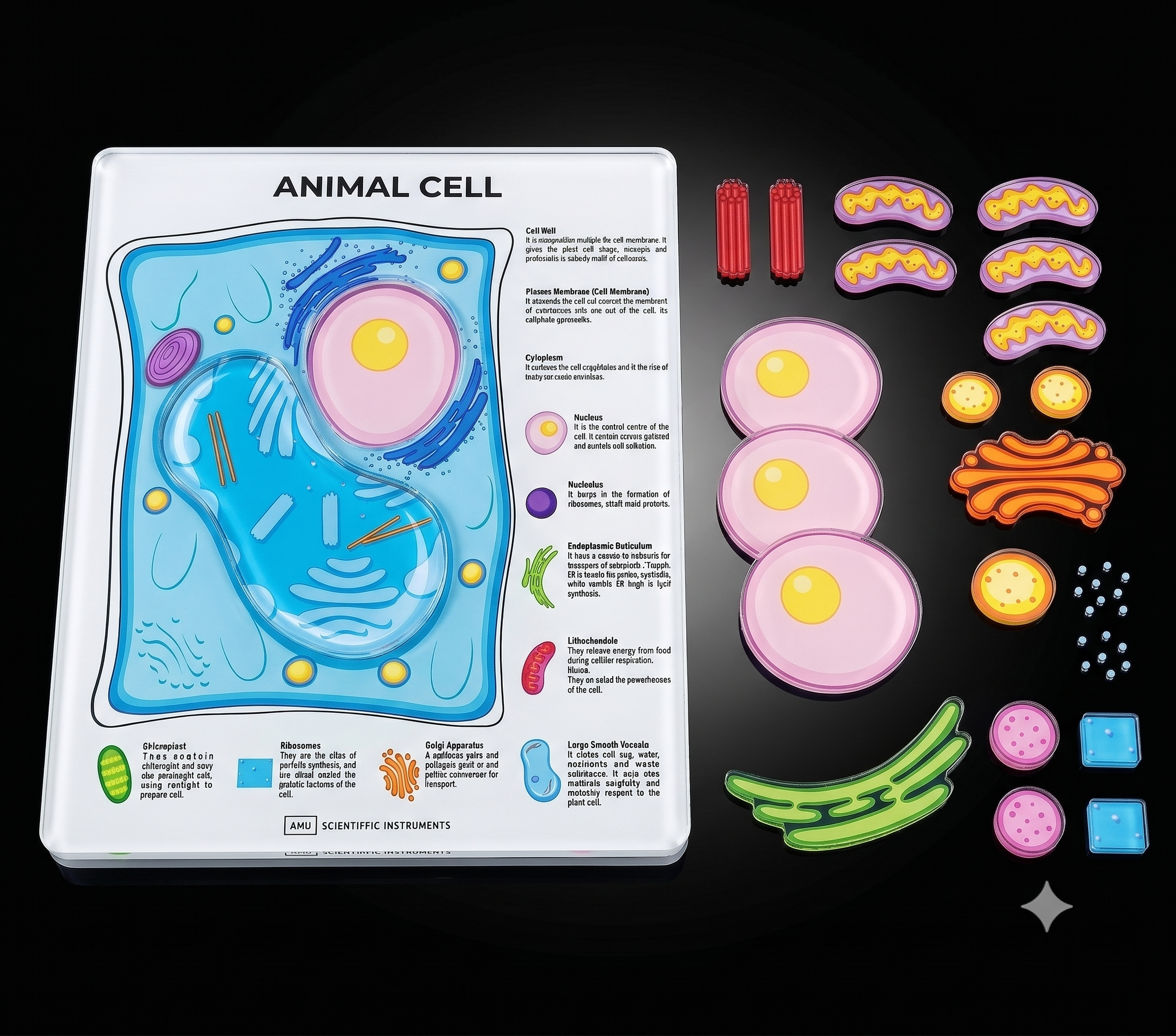
A cross-sectional model of an animal cell with labelled, distinguishable organelles for direct identification.
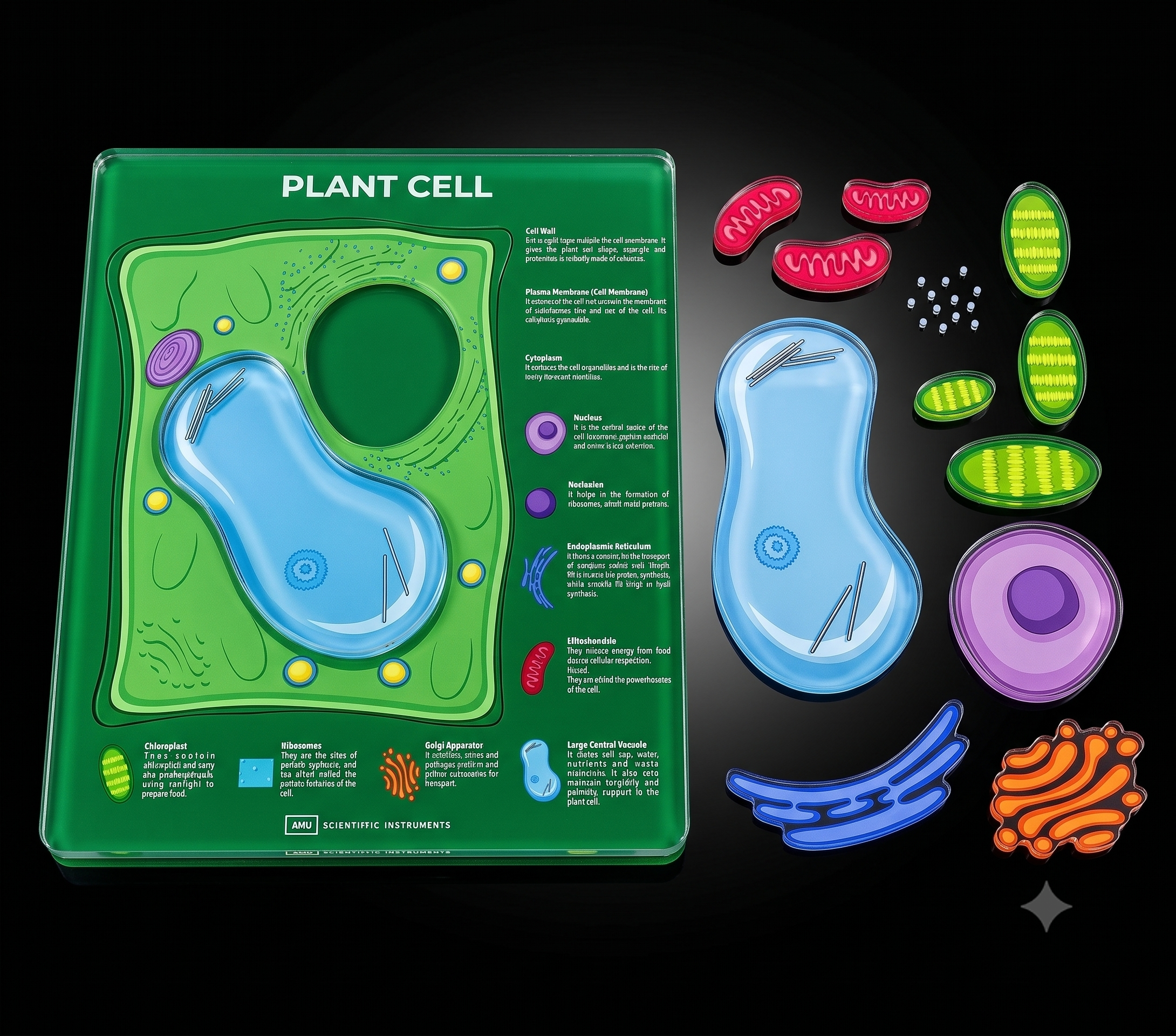
A cross-sectional model of a plant cell, including the cell wall, chloroplasts and central vacuole alongside the organelles shared with animal cells.
A hand-cranked spinning platform demonstrates how rotation separates particles of different densities outward from the centre.
A ball released from a fixed height on a curved track shows potential energy converting to kinetic energy and back, run after run.
An adjustable-fulcrum beam with hanging weights lets students test how effort, load and fulcrum position affect mechanical advantage.
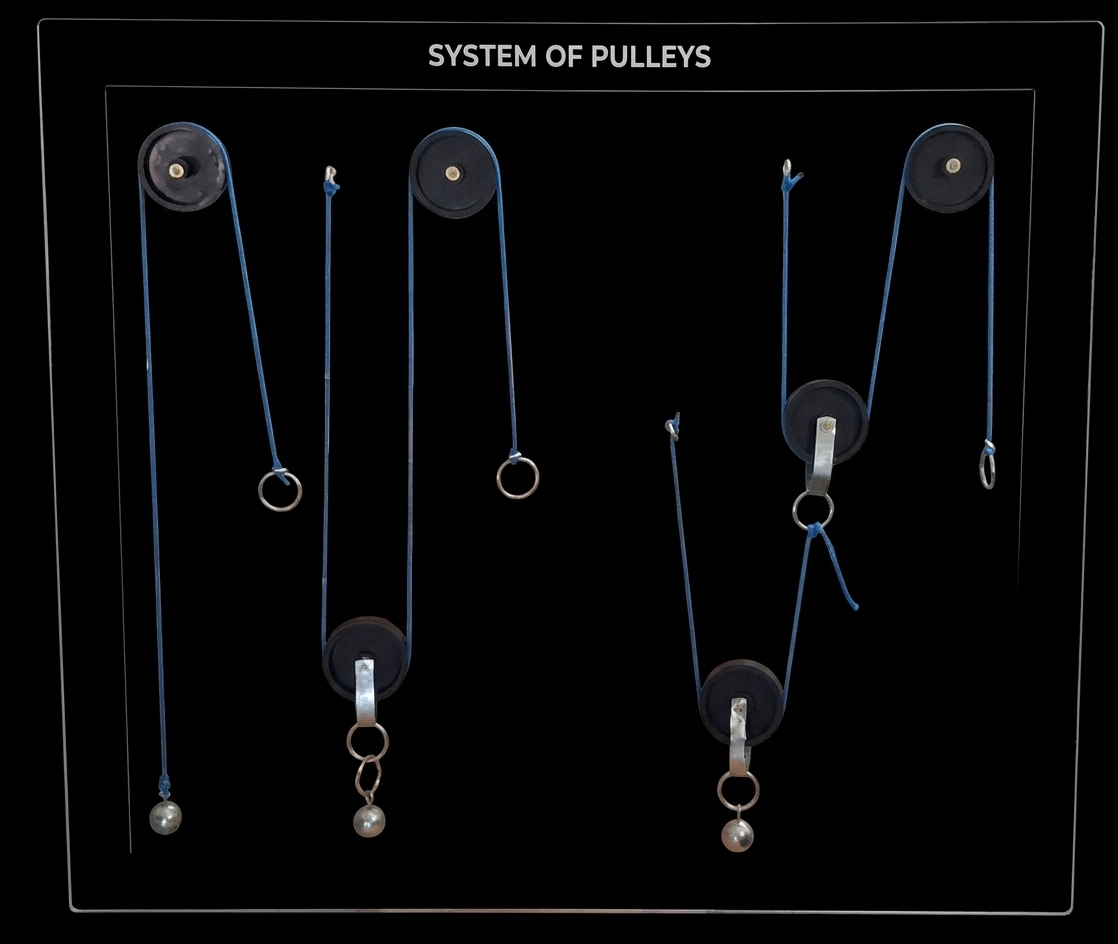
A single or combined pulley set shows how redirecting a rope over a wheel changes the force needed to lift a load.
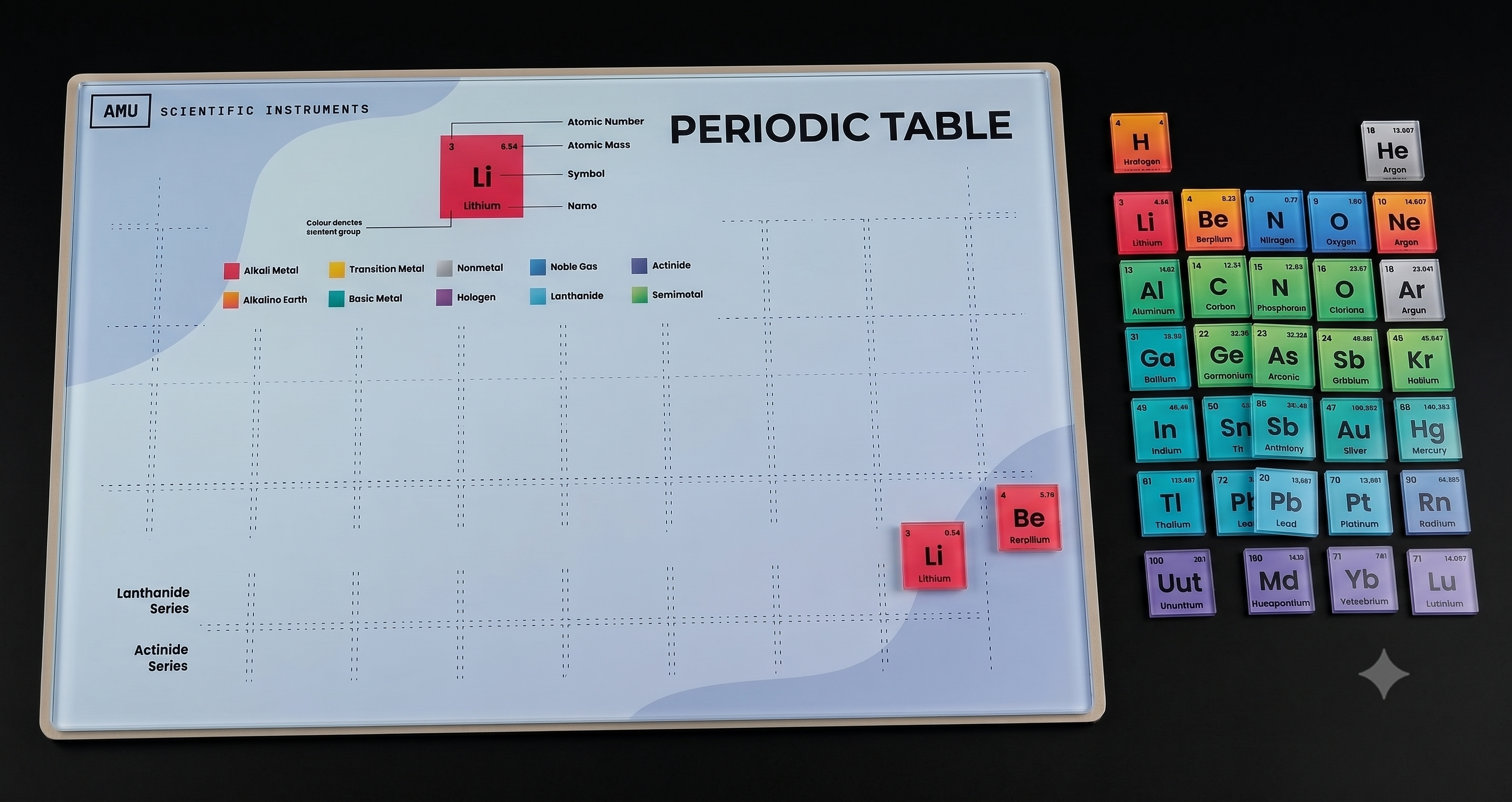
A structured reference board laying out atomic models and element data for classroom discussion of atomic structure.
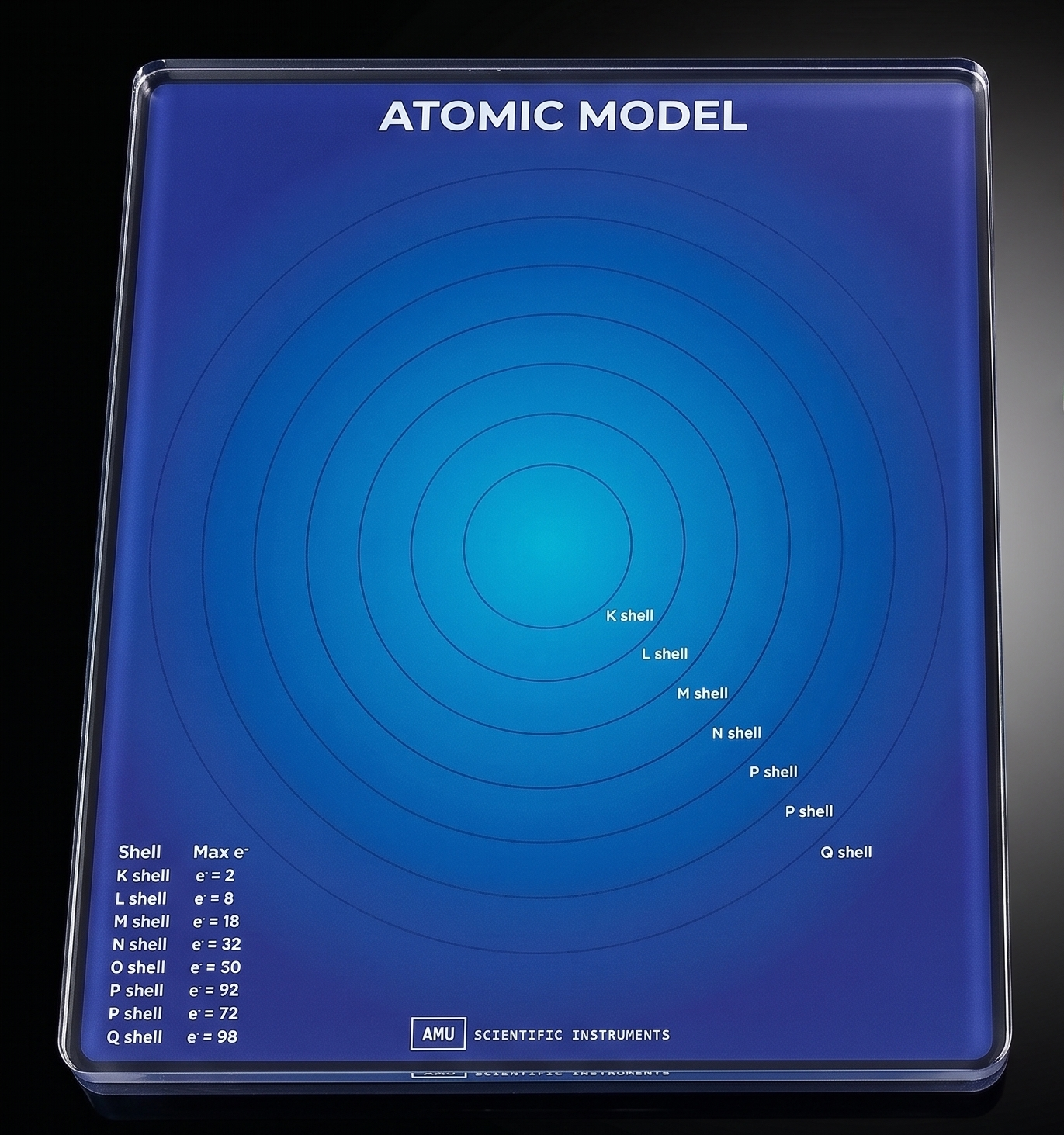
A physical model showing electron arrangement around a nucleus, used to introduce shell structure and valency.
A sound source that can be moved toward or away from a fixed listener demonstrates the pitch shift caused by relative motion.
A bimetallic-strip switch bends with temperature change, automatically breaking or completing a circuit — the basis of a thermostat.
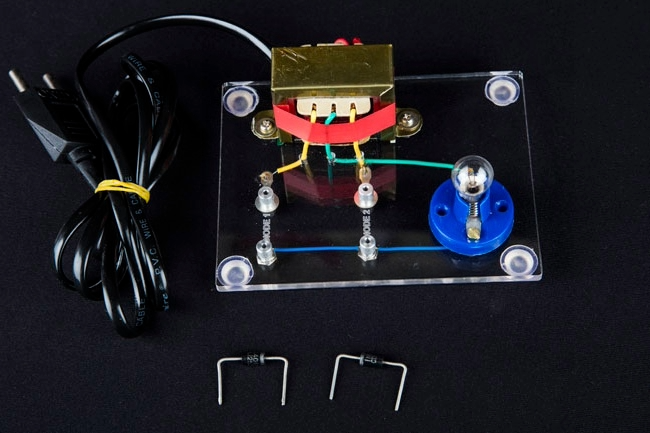
Two coils wound on a shared iron core show how alternating current in one coil induces voltage in the other.
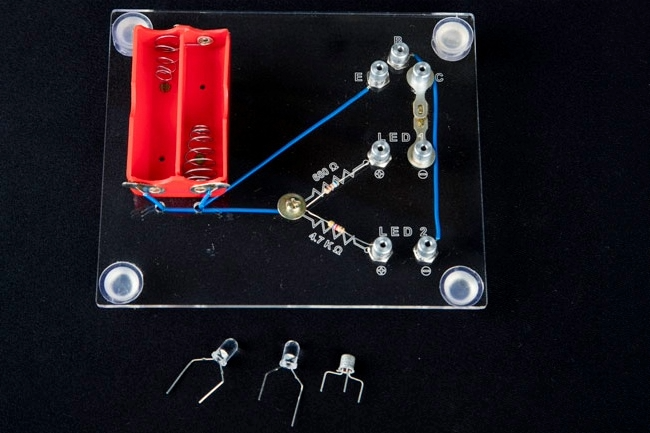
A mounted transistor wired into a simple switching circuit demonstrates how a small base current controls a larger current.
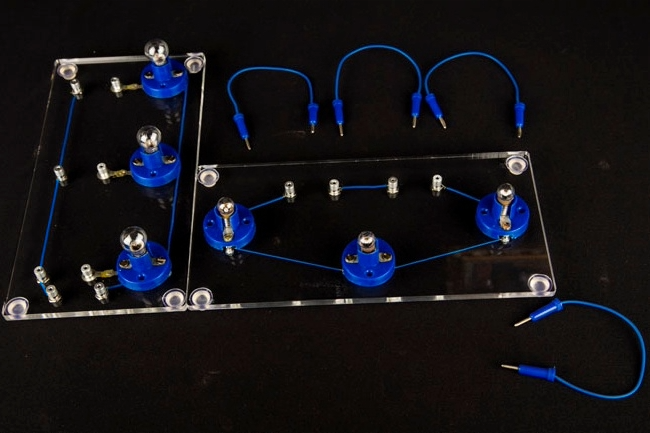
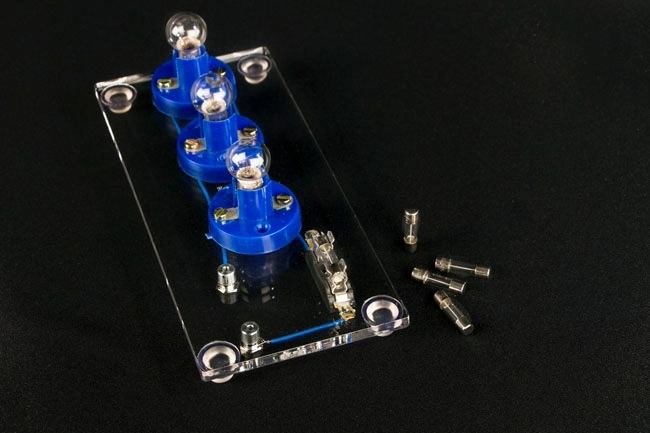
Multiple bulbs wired end-to-end show how current, voltage and brightness behave when components share a single current path.
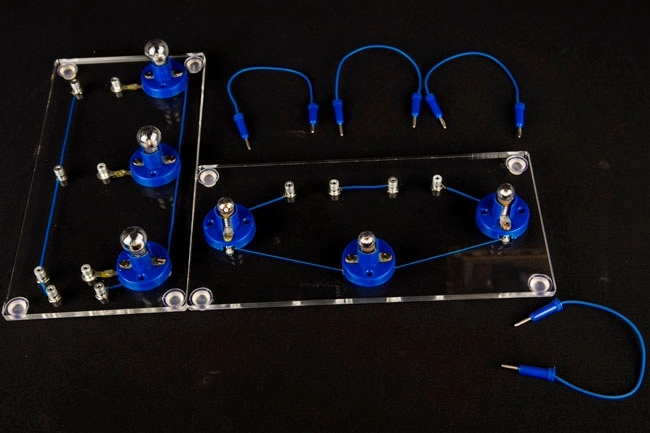
Multiple bulbs wired across shared junctions show how voltage stays constant and current divides across parallel branches.
A thin fuse wire in a live circuit visibly melts and breaks the circuit when current exceeds a safe limit.
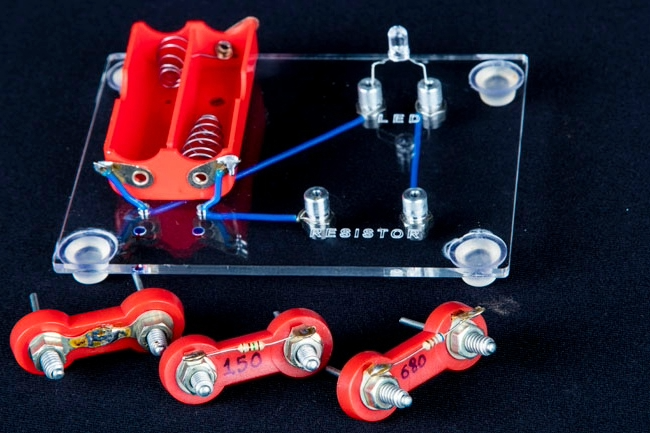
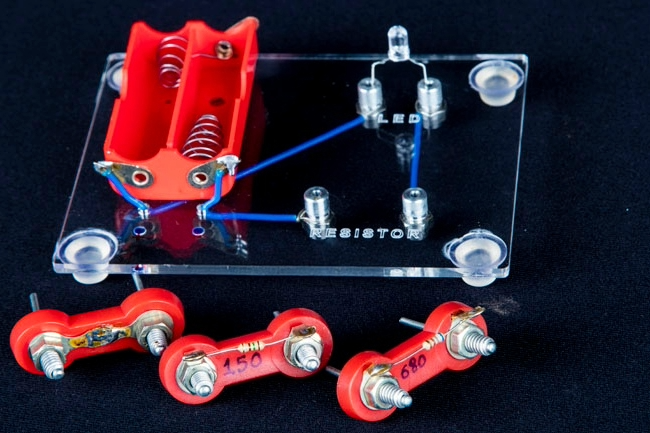
Swappable resistor and diode components in a test circuit show how each affects current flow differently.
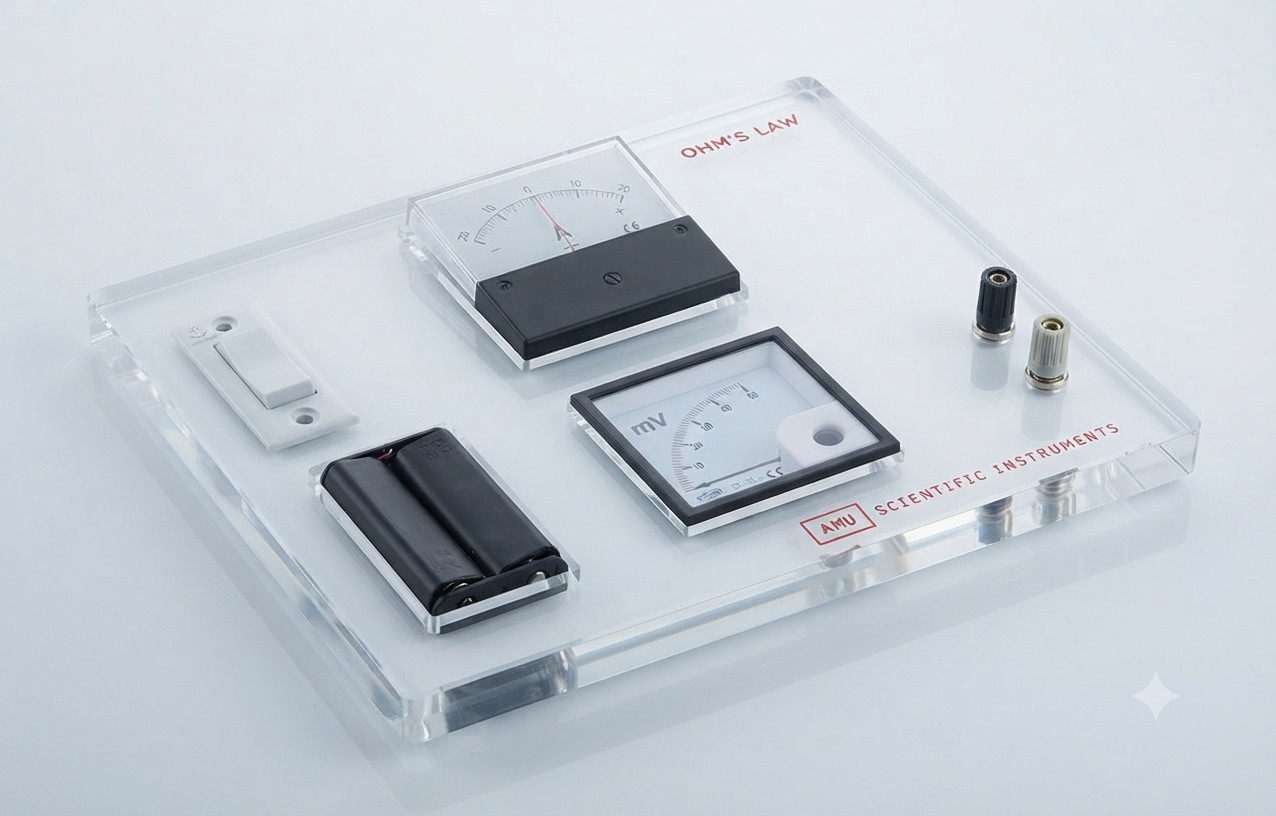
An adjustable-resistance circuit with an ammeter and voltmeter lets students verify the voltage–current relationship directly.
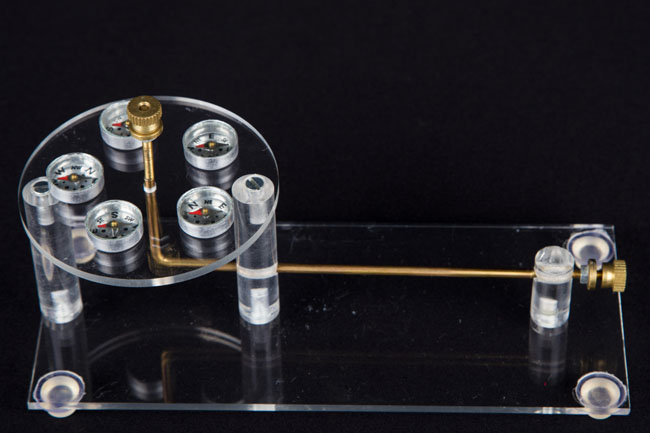
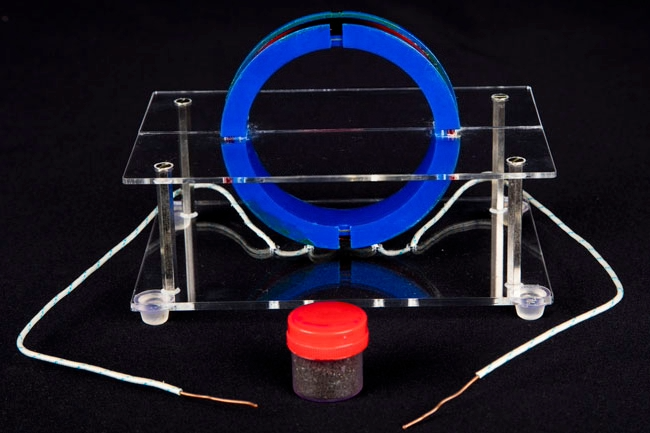
A single current-carrying circular loop mounted with a compass shows the magnetic field it produces at its centre.
A demonstration of the force between two current-carrying conductors, showing attraction or repulsion depending on current direction.
A straight current-carrying conductor suspended over a compass needle deflects it — recreating Oersted's original 1820 observation.
A magnetic sample loses its magnetism when heated past a threshold temperature and regains it on cooling, demonstrating the Curie point.
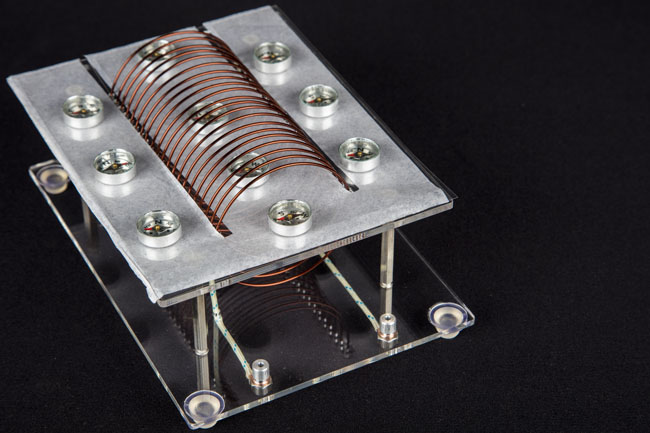
A hand-wound coil on a frame with a compass slot at its centre lets students compare field strength inside versus outside the loop.
Reach us directly using the details below, or send a message and we'll follow up by email.